
How much an Airbus H145 costs: 2026 prices
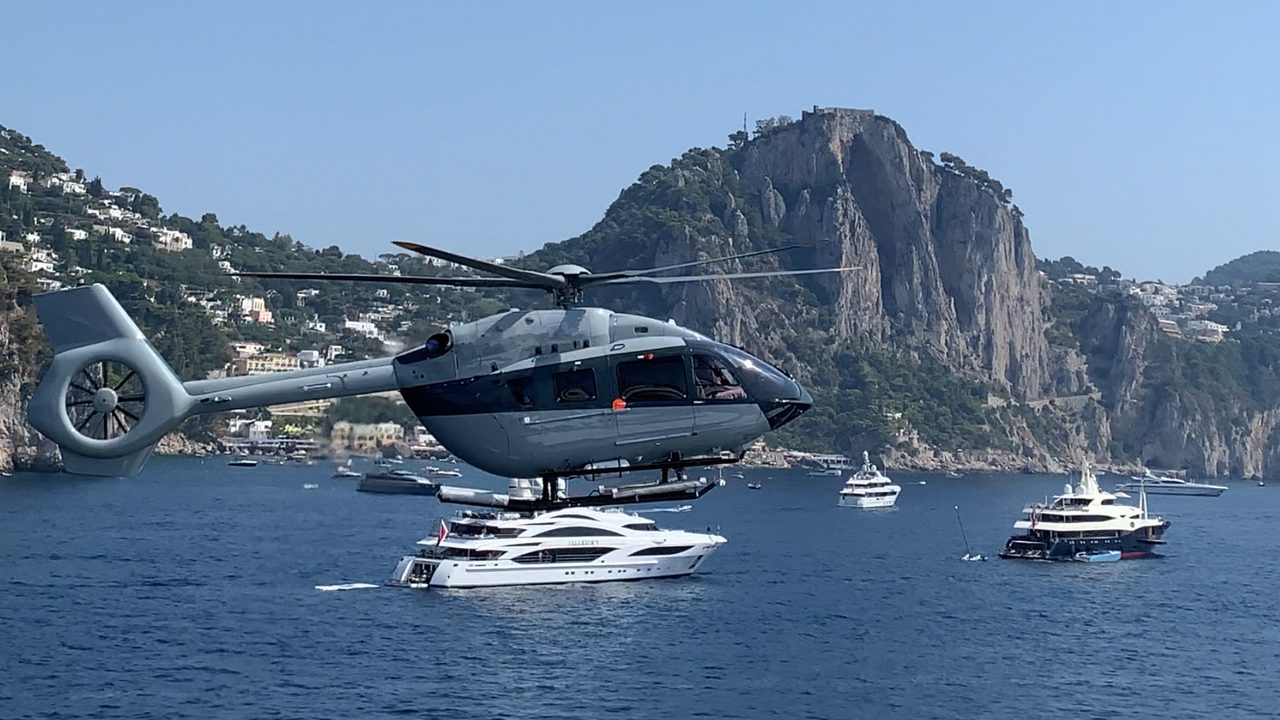
A new H145 costs in the order of $7.9–9.7 million; a pre-owned one goes for $5.5–7.0 million, to my information. Everything else lies between those two figures: the configuration, the rotor generation, the remaining life on components and the amount of conversion work. Here is what makes up the price and what is added to it once the deal is done.
The price corridor
| Position | Price reference |
|---|---|
| New civil H145 | $7.9–9.7 million |
| Pre-owned H145 (BK117 D-2) | $5.5–7.0 million, averaging around $6.0 million |
| Pre-owned H145 D3 (BK117 D-3) | $8.5–9.0 million |
| The predecessor EC145 (BK117 C-2) | $1.4–6.0 million, median around $3.5 million |
| Military H145M | about $23 million per aircraft in a package with support |
Prices are market reference points from open listings for 2024–2026, to my information. The value of a particular aircraft is calculated from its records, the remaining life on its components and its configuration.
The H145M stands on a line of its own. The figure of about $23 million comes from a package contract: four aircraft for $94.6 million, January 2025. That is a delivery with training, spares and support, and it has no bearing on the price of a civil aircraft.
Full specifications are on the model page.
What makes up the spread
The rotor generation. The five-blade D-3 against the four-blade D-2 is a difference of about three million dollars on the pre-owned market, to my information. The money buys 150 kilograms of useful load, a maximum take-off weight of 3,800 kg instead of 3,700 kg and lower vibration levels.
The generation of the family. The EC145 (BK117 C-2) and the H145 (BK117 D-2) go through the listings under similar names and differ in price by a multiple. Entry into an EC145 starts at $1.4 million, entry into an H145 at $5.5 million. The type designation is checked against the records before any conversation about price.
The configuration. The type spread into air ambulance, police and offshore work, and a substantial share of what is on the market comes in a special-mission fit. A medical module, an operator's console, a hoist, a searchlight — all of that equipment costs money and takes up the space a corporate task needs for seats.
Conversion. Turning an air ambulance aircraft into a passenger or VIP version means work, an interior replacement and re-issued paperwork. The sum is calculated as a project for the particular aircraft. The order of magnitude for the class is visible on the neighbouring AW169: converting an air ambulance fit into a VIP one is budgeted there at $1.5–3 million, to my information.
Remaining life on components. Two Arriel 2E engines, the transmission, the main rotor hub, components with an assigned life. Each position is counted separately, and an overhaul coming due turns an attractive price into the price plus the overhaul.
Avionics and equipment. The Helionix fit, weather radar, equipment for instrument flight, warning systems. Bringing the aircraft up to the requirements of the airspace you work in is measured in money and in weeks on the ground.
The H145 against its neighbours in price
| Type | Passengers | Pre-owned market | New |
|---|---|---|---|
| Airbus H145 | 9 | $5.5–7.0 million | $7.9–9.7 million |
| Airbus H135 | 7 | from $2.5 million | up to $8.0 million with options |
| Bell 429 GlobalRanger | 7 | $4.8–8.0 million, median $6.4 million | $6.4–7.3 million |
| Eurocopter EC145 | 9 | $1.4–6.0 million, median $3.5 million | out of production |
| Leonardo AW169 | 10 | from $8.0 million | from $14.0 million |
| Ansat | 7 | $1.3–1.5 million | $2.0–2.5 million |
Reference points to my information, current for 2026.
The H135 gives a cheap entry into the twin-engine class and gives up two passenger seats. The Bell 429 sits in the same money, goes faster and takes seven people. The AW169 adds a seat, 170 kilometres of range and a noticeably larger budget. The EC145 is the cheapest way to get nine seats in a twin, and the payment for that is the age of the airframe and a platform out of production.
The practical fork in the six-to-seven-million zone looks like this: a fresh Bell 429 with seven seats against a previous-generation H145 with nine. It is decided by who flies and by whether there are tasks that need the rear clamshell doors.
What is added to the purchase price
| Item | What it depends on |
|---|---|
| Pre-purchase inspection | The depth of the opening-up, the check of the records and of the actual remaining life. On a twin this is several weeks of work |
| Ferry or delivery | Distance, disassembly and reassembly for container shipping, insurance cover for the flight, permits along the route |
| Customs payments on import | The import regime, classification by code, the rates in force on the date of the deal |
| Registration and certification | Entry in the registry, the certificate of airworthiness, the radio station, recognition of the maintenance work already performed |
| Conversion of the configuration | The scope of interior and equipment work plus re-issued paperwork |
| Crew training | Type conversion, the simulator, line training. On western types add a trip to the training centre |
| The initial stock of spares | Consumables, filters, fast-wearing components. Without a stock the first defect turns into a month on the ground |
The sums on these items are calculated for the particular deal and the particular import route. Adding them into an average figure makes little sense: the spread between an aircraft inside the country and one coming from Europe is measured in multiples.
Upkeep: what makes up the flight hour
The costs divide into two parts, and both are calculated before the deal.
The fixed part runs regardless of flying. Hangar and parking, insurance, calendar inspections, continuing airworthiness management, crew and engineering support.
The variable part is counted from the hours. Fuel, line maintenance, inspections by hours flown, and the main item — the reserve for the overhaul of engines and components.
The reserve is discussed least often and weighs more than the rest. Every unit has a time between overhauls; the cost of the overhaul is divided by that interval, and the resulting sum is set aside with every hour flown. On gas turbine engines an overhaul costs tens of millions of roubles, to my information, and it comes due whether or not there was demand for flying this year. The H145 has two engines, and the reserve is counted on each of them.
Fuel takes between 15 and 25 per cent of the hour. The calculation of "consumption times the price of jet fuel" gives a figure several times below the real cost of an hour, and it is on that calculation that owners miss their first-year budget.
The annual budget is assembled line by line for the particular aircraft. The fixed part is counted for your base: hangar, the insured value and the hull rate, the salaries of crew and engineer, the calendar inspections. The variable part is multiplied by your plan of hours: fuel, line maintenance, inspections by hours flown and the reserve on each of the two engines. Reference calculators of operating costs work as a starting point; after that your own rates for your own base go into them.
When the type earns its keep
A reference point from practice: up to 100–150 hours a year, chartering is simpler and more predictable than ownership. The fixed part of the costs stays where it is whatever the amount of flying, and with few hours it lands on each hour in full.
Ownership starts to work in two scenarios. The first is steadily more than 150 hours a year with a route network you understand. The second is an aircraft needed on demand, without a request placed in advance. The second scenario is a normal reason to buy as well; it only wants to be called by its name: you are paying for availability.
A separate option is handing the aircraft to an operator who sells the spare hours. Such an arrangement covers part of the fixed costs and at the same time consumes life and increases the contributions to the reserve. How far the cost of ownership comes down is calculated for the particular aircraft, base and demand.
The order of work before the deal
Define the configuration for your task and the number of seats you actually need. Nine seats will not appear in an air ambulance aircraft without work and money.
Check the type designation against the records: C-2, D-2 or D-3. That is the first thing that sets the price.
Ask for the remaining life on both engines, the transmission and the components with an assigned life.
Calculate the import budget before the contract is signed: the regime, the payments, registration, the ferry.
Compare the annual budget of ownership with your actual need for hours.
The figures in this article are reference points; the specifics are calculated for the particular aircraft. The general order of helicopter prices is covered in how much it costs to buy a helicopter, and the structure of the flight hour in the breakdown of helicopter flight hour cost.
Alexander Filimonov — business aviation: sourcing, purchase and entry into service of aircraft.
We calculate the budget of the purchase and of the first year of ownership for your task, and go through the records of the candidates: https://grok.flights/en/buy.html
Which aircraft is right for you?
Enter your route, passenger count and budget — we will show the aircraft that fit, with prices, and estimate the cost of the flight.
Find the right aircraft